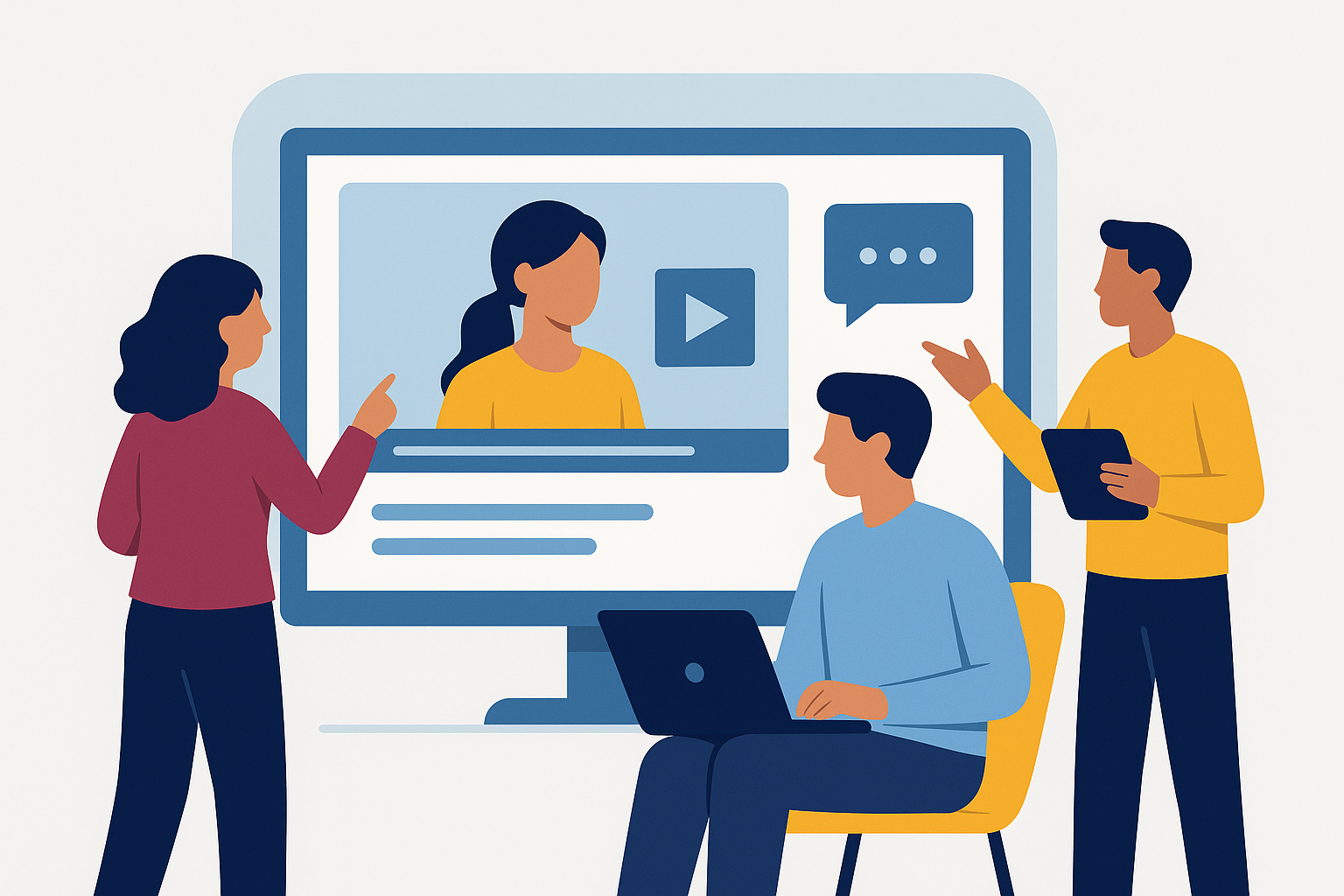
We all experience the world in unique ways, and with that comes variation in the ways we learn. Understanding the different types of learning styles in education can significantly impact the way instructors manage their courses and students, set up group projects, and adapt individual learning. Some students work best with diagrams. Others process concepts best through audiobooks or lectures. Still others feel most engaged while working with their hands. Without understanding and acknowledging these different ways of learning — especially important for online learning — you could end up with a handful of students lagging behind—in part because their learning styles haven’t been activated.
We all experience the world in unique ways, and with that comes variation in the ways we learn. Understanding the different types of learning styles in education can significantly impact the way instructors manage their courses and students, set up group projects, and adapt individual learning. Some students work best with diagrams. Others process concepts best through audiobooks or lectures. Still others feel most engaged while working with their hands. Without understanding and acknowledging these different ways of learning — especially important for online learning — you could end up with a handful of students lagging behind—in part because their learning styles haven’t been activated.
Researchers continue working to understand how we learn differently and what characteristics distinguish the core styles of learning from one another. The term ‘learning style’ refers to the preferential way in which a student absorbs, processes, comprehends, and retains information.
Gaining momentum in the 1960s through tests like the Myers-Briggs Type Indicator, the theory round learning styles in education posited that different students learn best when information is presented to them in a particular way. This theory was popularized in 1992 when Fleming and Mills suggested a new model of learning, the VARK Model, which is used to explain the different ways that students learn.
- Kinesthetic
- Visual
- Auditory
- Reading and Writing
Each of these learning styles is marked by key characteristics, and it is up to the instructor to adjust lessons and instruction for the students you are working with at any given time — an especially tall order for online instructors who aren’t able to leverage the benefits of in-person connection and interaction.
Here, we explore the four core learning styles in education, and how online instructors can activate each learning style using a combination of different tactics and the right kind of technology.
Kinesthetic Learning
How to recognize kinesthetic learners: Kinesthetic learners, sometimes called tactile learners, learn through experiencing or doing things. According to VARK, 22% of learners prefer a kinesthetic learning experience over all other styles of learning. When allowed a combination of learning styles, 87.1% of people included kinesthetic learning as one of their preferences. They like to get involved by acting out events or using their hands to touch or handle in order to understand concepts. These types of learners might even struggle to sit still and often excel at sports or like to dance.
How to activate kinesthetic learning: The best way instructors can help these students learn is by getting them moving. Try encouraging students by incorporating movement into lessons like pacing to help memorize or learning activities that involve moving about their room.
Visual, interactive and dynamic is what keeps these students in the game. With built-in multimedia, online discussions can help fill the void these kind of learners might feel online. Freely exchange thoughts, post work, and provide or receive constructive feedback—just like you would in a campus environment.
For example, at Brown University, students create a variety of in-app multimedia, including photo essays for digital storytelling, video and audio snippets, and use social media-like reactions and tagging to respond to others. Using Harmonize, Brown was able to bring the digital storytelling activity inside a supported platform that required no additional training for students and provided a wider variety of intuitive in-app content creation tools. As a result, creating digital stories and photo essays became easier, mimicking the act of physically producing a new piece. In addition, assignment submissions — particularly in art or science-based online courses — could center around students recording themselves building a piece and submitting that video as the assignment.
Visual Learning
How to recognize visual learners: Someone with a preference for visual learning is partial to seeing and observing things, including pictures, diagrams, written directions, and more. This is also referred to as the “spatial” learning style. Studies have shown that the majority of people are visual learners, with 65% of individuals saying they learn best through visual means. These learners are your doodling students, your list makers, and your notetakers.
How to activate visual learners: The whiteboard, smartboard, or poster board is your best friend when teaching these types of learners. Give students opportunities to draw pictures and diagrams, or ask students to doodle examples based on the topic they’re learning. Instructors looking to activate visual learners should consider using presentations and multimedia. Visual learners may also need more time to process material, as they observe the visual cues before them.
Visual learners are more likely to remember, retain, engage, and apply information that they have seen — which for online instructors means incorporating a healthy amount of visual aids into your lessons is a must. To do that, consider using tools that support video, image, document annotation for feedback. Encourage students to present their assignments in a variety of formats, including video, image, or written. Then allow for group feedback by using social annotation tools that allow students and yourself to draw, type, or record video/audio feedback. When these types of learners SEE the feedback, they’re more likely to receive it.
Auditory Learning
How to recognize auditory learners: Auditory learners tend to learn better when the subject matter is reinforced by sound. These students would much rather listen to a lecture than read written notes or presentations, and they often use their own voices to reinforce new concepts and ideas. These types of learners prefer reading out loud to themselves. They aren’t afraid to speak up in class and are great at verbally explaining things.
How to activate auditory learners: Since these students generally find it hard to stay quiet for long periods of time, get your auditory learners involved in the lesson by asking them questions and having them repeat new terms and concepts out loud.
In your online courses, consider facilitating group discussions so your auditory and verbal processors can properly take in and understand the information they’re being presented with. Use small-group breakout discussions and small-group chats to allow students in your online class to work with another on a research and presentation project. Students will get familiar with how to meet remotely, discuss responsibilities, project manage, and deliver for the group — all of which teach accountability in a remote team setting.
Use integrated web conferencing tools in your online course to give live, synchronous feedback to a student or use recorded video. At minimum, always be sure to include lessons that students can listen to, and look to expand opportunities for students to vocally problem solve. Again, using sound-based multimedia, like videos, song, and mnemonic devices, is an effective way to support auditory learners.
Small group, student led, or class-wide discussions are a powerful way to activate multiple learning styles.
Reading and Writing Learning
How to recognize reading/writing learners: The reading/writing learner is sometimes thought of as a sub-type of visual learner. These learners find writing, reading articles, and taking notes to be most helpful when learning. These learners are drawn to expression through writing, reading articles or books, writing in diaries, looking up words in the dictionary, and searching the internet for just about everything.
How to activate reading/writing learners: You can capitalize on this learning style by writing discussion board posts in your courses, reading from your textbooks or notes, and writing down definitions. Many times reading and writing learners find it helpful to write down concepts multiple times in order to grasp and retain new information. Be mindful about allowing plenty of time for these students to absorb information through the written word, and give them opportunities to get their ideas out on paper.
But beware, when it comes to your online courses, don’t assume that a rigid PDF-based lesson will suffice. This learning style emphasizes text-based input and output – reading and writing in all of its forms, and a strong reading/writing learner often needs a combination of resources to effectively understand a concept. A great way to help these students learn is by having them describe diagrams or charts using written statements. Then, they can study their notes later to better retain the information. They will also want to discuss or witness a concept, then use written language to fully process the concept.
Embrace All Learning Types in Education
Ask any educator, and they will tell you how important it is to embrace every student’s learning style so that each student gets the best experience in their courses. When it comes to online course creation, this remains true. And understanding and working to activate these different learning styles through the online modality doesn’t end when your course ends. Pinpointing how a student learns best can dramatically affect their ability to connect with the topics you’re teaching, as well as how they participate and engage.
By opening up each student to a variety of tools and tactics for learning — including ways that suit their own preference — instructors are empowering students to own their learning and setting them up for future success.
Now that you have some tactics in your back pocket to accommodate the different learning styles in education, consider the activities, lessons, and technology you’ll use to activate those styles of learning. That’s where Harmonize comes in.
Harmonize is a suite of online collaboration tools for education that integrate seamlessly with your LMS to increase student engagement and support each learning style. It’s everything an instructor needs to increase student engagement and promote inclusive learning, while saving time and eliminating manual tasks.
If you’re currently researching which tools to support your online course, consider using these tool comparison pages as a resource.
See Harmonize in action
Your one online student engagement app to replace them all